
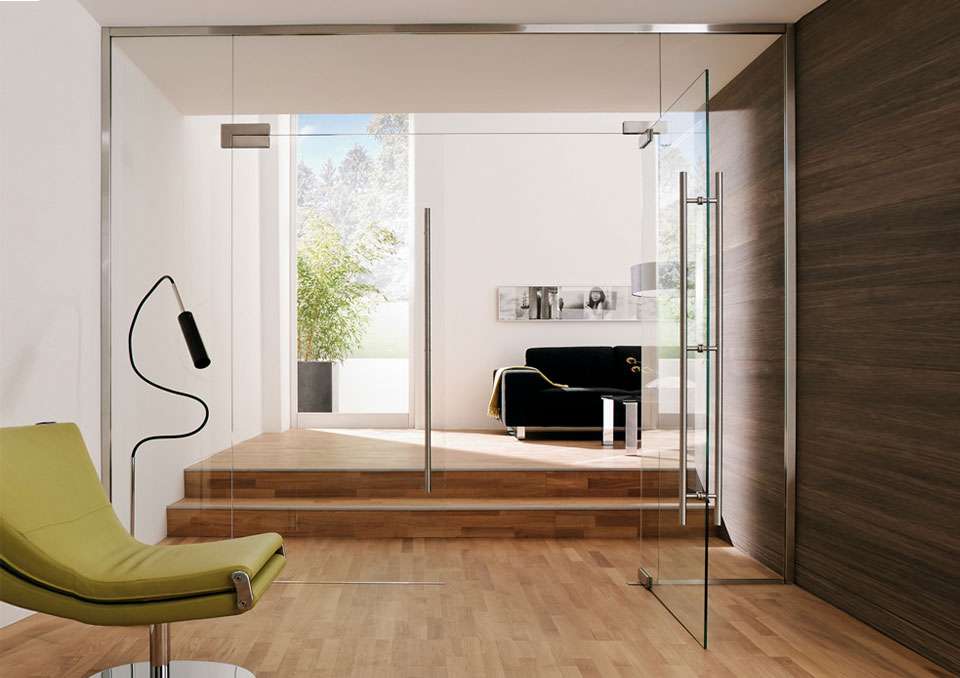
Patch door hardware is the set of clamp-style fittings and related parts used to hang, close, latch, and pull a frameless glass swing door. It uses patch fittings at the top and bottom of the glass to connect the door to pivots, closers, locks, and handles. It is common in commercial entrances, office partitions, and interior glass doors where a clean glass look matters.
If you are buying or specifying in Canada, the key is to confirm glass prep, door size, swing, and the exact functions you need before ordering. That prevents site delays and missing parts.
Quick answers for specs and takeoffs
This section gives fast answers you can copy into a door schedule or use for a first pass takeoff.
What is patch door hardware
Patch door hardware is a system that clamps onto the glass with metal fittings called patch fittings. Those fittings provide mounting points for pivots, closers, locks, and pulls without a full frame around the door.
A common mistake is calling any frameless glass door fitting a patch fitting. Many shower fittings look similar but are not built for the same door loads or prep.
Where is it commonly used
You will see patch door hardware on storefront style swing doors, lobby doors, office glass partitions, and interior glass doors with sidelites. It is also used where you want a minimal look but still need a closer and lock.
A common mistake is choosing patch hardware for a location where a framed door would be more forgiving. If the opening is out of square or the floor is not ready for closer work, you can run into rework.
What parts make up a complete set
A complete set usually includes top and bottom patch fittings, a pivot or floor closer, and the pull hardware. If the door needs to latch, it also includes a lock body and the strike or keeper that the lock closes into.
A common mistake is ordering the door patches and closer but forgetting the strike details. The lock can be perfect and still not work if the strike side is not planned.
What information you need before you order
At minimum you need door width and height, glass thickness and type, swing direction, and the functions you need such as closer, hold open, latch, and access control. You also need to confirm the glass cutouts and edge work expected by the chosen patch fittings.
A common mistake is placing the order with only a photo and a rough opening size. Most delays come from missing prep details.
What patch fittings do on a glass door
Patch fittings are more than clamps. They are the connection point that makes the whole door set work.
They also affect how the glass is prepared by the fabricator, so it pays to align early.
How patch fittings grip and protect the glass
Patch fittings clamp the glass using gaskets and a shaped housing that spreads contact over a wider area than a point fastener. This helps reduce stress at the connection points when the door swings and closes.
A common mistake is mixing gasket types or reusing old gaskets. If the glass is not seated evenly, you can get movement, noise, or uneven alignment.
How they carry pivots locks and pulls
The patch fitting provides mounting points for pivot spindles, closer arms, lock followers, and handle through bolts depending on the system. In many sets, the bottom patch connects to the floor closer and the top patch supports the top pivot.
A common mistake is assuming any top patch will match any bottom patch. Series matching matters because the pivot locations and cutouts can differ.
When a rail or frame may be a better fit
A rail or framed door can be a better choice when you need more stiffness, when the opening tolerances are loose, or when the site conditions make floor closer work difficult. A rail can also hide minor edge issues and reduce visible hardware joints.
A common mistake is forcing patch hardware into a tough opening to keep the look. A clean look is not clean if the door rubs or does not latch.
Common use cases in commercial and residential work
Patch door hardware shows up across many glass hardware jobs. The context changes what matters most in the spec.
Think about traffic level, how often the door must close, and how the door will be secured.
Storefront and lobby entrances
In lobbies and retail entrances, doors see high use and the closer choice becomes central. Many teams also need lock and access control planning, plus durable finishes that suit cleaning routines.
A common mistake is selecting hardware before confirming how the door will be managed after hours. The lock function, cylinder type, and strike surface need to match the building plan.
Office partitions and interior doors
Office glass partitions often use patch sets to keep sightlines open and maintain a light look. The door may not need a lock, but it still needs reliable closing and alignment to avoid glass to glass contact.
A common mistake is skipping door stops or planning for glass edges to act as stops. Glass should not be the stop surface.
Glass walls with a swing door
On glass walls with sidelites, the strike side might be glass to glass rather than glass to wall. That changes strike selection and how you manage gaps and latching.
A common mistake is treating a glass sidelite like a fixed wall. The strike must be designed for the actual receiving surface.
When people confuse patch hardware with shower door hardware
Residential buyers sometimes see patch clamps and assume they are interchangeable with shower door clamps. Shower doors often use different hinge types, different prep, and different assumptions about use and sealing.
A common mistake is trying to use shower style clamps on an interior swing door. Even if it fits, the system may not provide the closer and latch functions needed for the space.
The parts of a complete patch door set
Many problems on site come from missing one small part. This section helps you build a full bill of materials.
Use it as a checklist for procurement and for coordination with the fabricator.
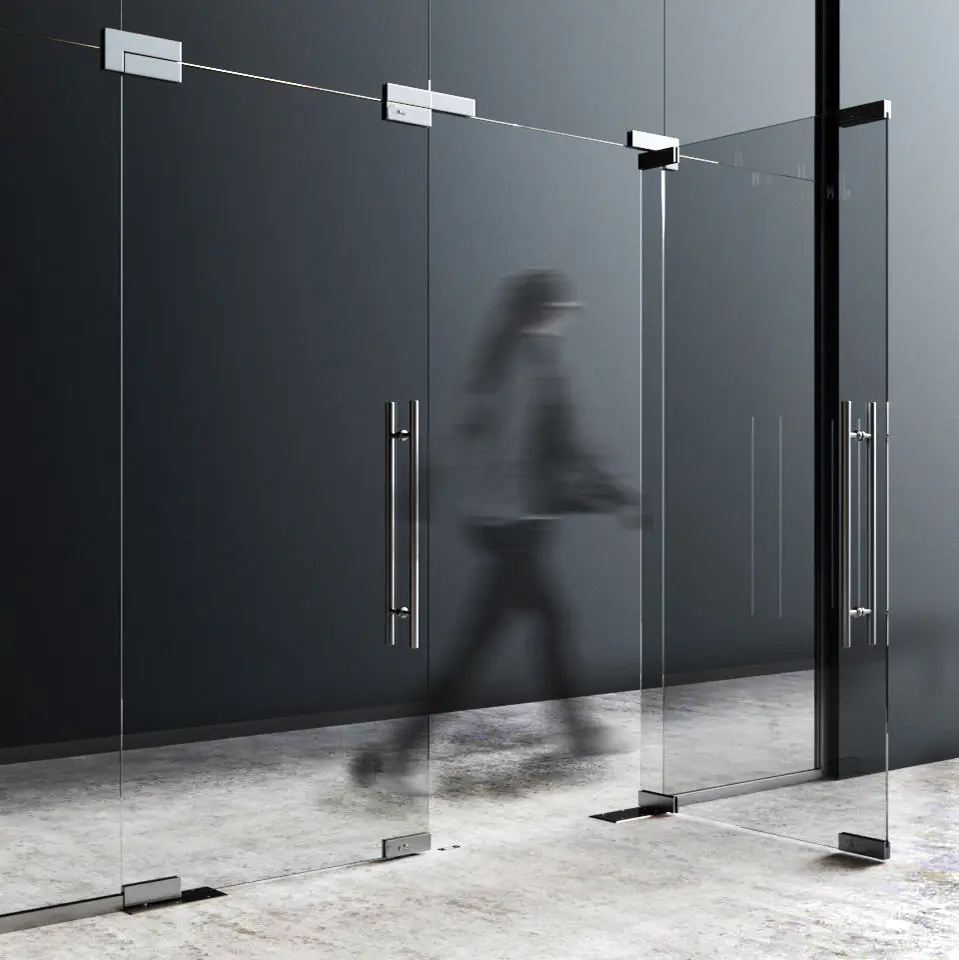
Top patch and bottom patch
The top patch usually supports the top pivot and helps stabilize the door. The bottom patch usually connects to the floor closer spindle or bottom pivot and takes much of the functional load of the door movement.
A common mistake is ordering patches that look right but do not match the glass cutout the fabricator planned. Always confirm the cutout template for the exact series.
Floor closer or pivot system
Many commercial patch doors use a floor closer for controlled closing. Some interior doors may use a pivot set without a closer if local requirements and project goals allow, but many projects still need controlled closing for safety and comfort.
A common mistake is ignoring floor build up and slab details. A floor closer often needs planning before final flooring goes in.
Lock options and strike options
Patch door locks can be deadlatch style or deadbolt style depending on the application, with different strike or keeper options. The strike might mount to a jamb, a floor socket, or another glass panel depending on the design.
A common mistake is specifying the lock body without confirming the receiving condition. The best lock still fails if the strike cannot be mounted cleanly.
Pull handles and knobs
Pull hardware may be back to back pulls, ladder style pulls, or compact pulls depending on the door size and user needs. Handle hole spacing must match the chosen pull, and the pull must clear any lock or patch housing.
A common mistake is choosing a long pull that conflicts with the patch or lock position. Check clearances early, especially on narrower doors.
Side panels transoms and connecting fittings
If the door is part of a full glass entrance, you may also need fittings for sidelites and transoms, plus connectors that tie glass panels together. Those parts affect how stable the whole assembly feels and how gaps are controlled.
A common mistake is treating the door set as separate from the surrounding glass. The door performance depends on the stability of the adjacent panels.
How to spec a complete set step by step
This is the core process section. If you follow it, you will prevent most avoidable mistakes.
It also makes it easier for a supplier to quote quickly and accurately.
Define door type single door or pair
Start by deciding if you have one swing door or a pair meeting in the middle. That choice affects closer selection, lock type, and strike planning.
A common mistake is designing a pair but ordering like two singles. Meeting stile details and latching are different.
Confirm handing swing and traffic direction
Confirm which way the door swings and which side is push or pull from the main approach. In many Canadian commercial spaces, you also need to coordinate with accessibility and egress requirements at a high level [source needed].
A common mistake is describing swing direction without a plan view or clear notes. Use simple language plus a marked photo or sketch.
Confirm glass type thickness and edge detail
Confirm the glass thickness and type, and whether the edge is polished, seamed, or has special requirements. Patch fittings are chosen to match the thickness range and the glass prep style.
A common mistake is assuming thickness from a past project. Always confirm because thickness affects gasket choice and cutouts.
Choose closer and pivot method for the opening
Choose whether you are using a floor closer, a concealed closer, or a pivot set that relies on other methods for closing control. Your choice should reflect traffic, user comfort, and site readiness.
A common mistake is choosing a closer without thinking about floor conditions and timing. If the floor closer cannot be installed when the slab is open, you may face costly changes.
Choose lock function and access needs
Decide if the door needs a latch, a deadbolt, or no lock at all. If access control is planned, coordinate cylinder type, thumbturn needs, and any electric components at a high level [source needed].
A common mistake is leaving access control decisions to the end. That often forces a last minute lock swap that does not match the glass prep.
Choose finish and environment considerations
Pick a finish that matches the design and the cleaning and corrosion environment. For coastal areas or high humidity zones, confirm with the supplier what finish and material options are suitable [source needed].
A common mistake is selecting a finish only by color. Finish performance and maintenance matter, especially in public spaces.
A simple spec process you can reuse
- Confirm door layout and receiving surfaces
- Confirm swing and functional needs
- Confirm glass thickness and prep templates
- Select patch series and closer or pivot method
- Select lock and strike strategy
- Select pulls and confirm clearances
- Review the full set with the fabricator and installer
A common mistake is skipping step three. Glass prep is hard to change once cut.
Key dimensions and site details you must confirm
Once you know the system direction, the next risk is missing site details. This is where many procurement delays start.
Treat these as required inputs, not optional details.
Door width height and gap targets
Door size affects hardware selection and feel, and gaps affect latching and clearance. Confirm the intended gap targets with the installer and designer so the strike and stop strategy fits the real build.
A common mistake is using nominal door sizes without checking actual site opening. A few millimetres can change how the door closes.
Floor condition and closer box planning
If you are using a floor closer, confirm slab condition, floor finish thickness, and any waterproofing or heating elements that could conflict. Plan who is responsible for the closer box and when it will be installed.
A common mistake is discovering a conflict after tile is down. That is a high cost problem.
Frame or jamb condition and strike prep
Confirm what the strike mounts to. It may be a metal jamb, wood jamb, concrete, or glass, and each one needs a different approach and fasteners.
A common mistake is assuming the receiving surface is solid and plumb. If it is not, the lock alignment can drift.
Sidelite and transom layout
If there are sidelites or a transom, confirm glass thickness, connectors, and where the fixed panels are anchored. A door can feel unstable if fixed panels are under supported.
A common mistake is leaving the sidelite support details vague. The door relies on the surrounding structure staying true.
Compatibility checks that prevent problems
This section is about avoiding mix and match surprises. Compatibility is where good specs become smooth installs.
These checks also make your RFQ easier to evaluate.
Patch fitting brand and series matching
Patch fittings, pivots, and locks often have series dependencies. Even when parts look similar, the pivot center, cutout, and clearance can differ.
A common mistake is buying patches from one source and a closer from another without confirming they are intended to work together.
Cutout and glass prep coordination with the fabricator
Confirm the exact cutout templates and hole patterns before glass is cut. Share the hardware schedule and cutout drawings with the fabricator and ask for a confirmation in writing.
A common mistake is letting the fabricator guess based on a photo. Photos do not show the critical cutout geometry.
Locks pulls and door stop conflicts
Check that the handle does not clash with the lock body or patch housing. Plan door stops so the door does not over swing into glass, walls, or furniture.
A common mistake is treating door stops as a field decision. Stops affect patch stress and user safety.
Using the right gaskets for the glass
Gaskets should match the glass thickness range and the glass type. Confirm that the gasket material is appropriate for the environment and expected cleaning chemicals [source needed].
A common mistake is using a gasket that is slightly off and tightening harder to compensate. That can lead to uneven seating.
Common mistakes buyers and installers make
This section pulls the most frequent failure points into one place. It is useful for project managers and procurement teams.
Use it as a pre install review list.
Ordering hardware before confirming glass prep
If the glass is already cut, your hardware choice is limited. If the hardware is already ordered, your glass prep becomes locked.
A common mistake is trying to solve a mismatch with site drilling or grinding. That is risky and often not acceptable.
Missing strikes keepers or cylinders
Locks often require small companion parts that are easy to miss in a quote. Cylinders, thumbturns, strikes, keepers, and spacers can be separate line items.
A common mistake is assuming the lock body includes everything needed. Always confirm what is included.
Ignoring floor closer constraints and cover plates
Floor closers have box sizes, spindle positions, and cover plate options. Flooring thickness and finish lines can affect whether the closer sits flush and looks clean.
A common mistake is choosing a cover plate late, then finding it does not match the finished floor cutout.
Choosing finishes that do not suit the space
High touch public doors need finishes that handle cleaning and contact. Some finishes show wear faster or need different care routines.
A common mistake is selecting a finish that matches other metalwork but does not match the door usage pattern.
Forgetting code and accessibility checks at the doorway level source needed
Doorway requirements can affect closer settings, opening forces, clear widths, and hardware type at a high level [source needed]. Coordinate early with the project lead responsible for compliance.
A common mistake is leaving this to the installer at the end. If changes are needed, lead times can become the bottleneck.
Practical examples of complete sets by application
Examples help translate specs into real bundles. These are not test claims or performance promises.
They are realistic ways teams commonly package patch door hardware.
Single swing door in an office partition
A typical interior partition door might use top and bottom patches, a floor closer for controlled closing, and a back to back pull. If privacy is needed, add a patch lock and a strike to the jamb or glass sidelite.
A common mistake is skipping a stop and letting the door hit the sidelite. Plan a stop from day one.
Double door at a commercial entrance
A pair at a main entrance often uses floor closers on each leaf, patches sized for the door thickness, pulls, and a lock strategy that matches how the pair secures. One leaf may be active and the other may be inactive depending on the design.
A common mistake is not planning the meeting condition. The latch strategy is different when two glass leaves meet.
Glass door with sidelites in a retail fit out
A retail entrance with sidelites often uses patch fittings on the door, connectors for the sidelites, and a strike planned for the actual receiving surface. The goal is a stable opening that stays aligned under daily traffic.
A common mistake is under specifying the sidelite supports. If the sidelite moves, the door alignment changes.
Sliding systems and railings where patch door hardware is not the right choice
Patch door hardware is for swing doors. For sliding doors, you need a sliding system with a track, rollers, and stops designed for that motion. For railings, you need railing hardware such as posts, clamps, or base shoe systems.
A common mistake is using the word patch for any glass clamp. Match the system to the movement and the safety role.
What to include in your enquiry for faster quoting
A clear enquiry reduces back and forth. It also helps the supplier propose the right category and compatible set.
Use this as a short checklist for your procurement team.
The minimum details we need for a quote
Provide the door schedule details, glass thickness, swing direction, and whether you need a closer and a lock. Include finish preferences and the project location in Canada, since lead times and stocking can vary by region.
A common mistake is sending only the architectural elevation. Elevations rarely show floor closer planning and strike surfaces.
Drawings photos and door schedule notes that help
A marked plan view, a section at the sill, and photos of the site condition help a lot. Notes about floor finish, jamb material, and access control intent can prevent wrong assumptions.
A common mistake is sending photos without context. Add labels and a simple sketch so the photo makes sense.
Lead time and site delivery questions to ask for Canada projects
Ask what is stocked locally, what is made to order, and how long finishes take. Confirm packaging, delivery location requirements, and whether spare gaskets or cover plates are recommended for maintenance.
A common mistake is assuming all parts arrive together. Some finishes or special locks can lead the schedule.
A short enquiry checklist you can copy
Use this checklist in your email or RFQ.
- Door count and single or pair
- Door width and height
- Glass thickness and type
- Swing direction and handing notes
- Closer needed yes or no
- Lock needed yes or no and function
- Receiving surfaces jamb floor or glass
- Finish preference
- Photos and marked plan view
If you include these items, most quotes can be turned around faster and with fewer clarifying questions.